
Most clergy pride themselves on being biblically literate. We realize that biblical literacy is not a one-shot affair; we continue to dedicate time and energy to scriptural study throughout our careers.


What you'll find in this article:
Last week, Jenna tried to log into her old photo storage account to find a picture from a family trip. She typed in what she thought was the right password, but no luck. She tried another. Then another. After five failed attempts and a reset link later, she finally accessed her account. That’s when it hit her; she had a different password for everything -- email, banking, streaming, shopping, work apps, even her dog’s vet portal.
When she checked her password manager, it listed 137 saved logins. Jenna laughed and said, “No wonder I can never remember any of them. I have more passwords than I do socks!”
Time to Rethink the Way We Log In
For decades, passwords have been the gatekeepers of our digital lives, yet they’re also the weakest link. From forgotten credentials to phishing attacks and data breaches, the traditional password system is showing its age. Enter passkeys center stage: a more secure and user-friendly way to authenticate that promises to eliminate the hassle and vulnerabilities of passwords altogether. As tech giants embrace this shift, the question isn’t if passkeys will replace passwords; it’s when.
What are Passwords?
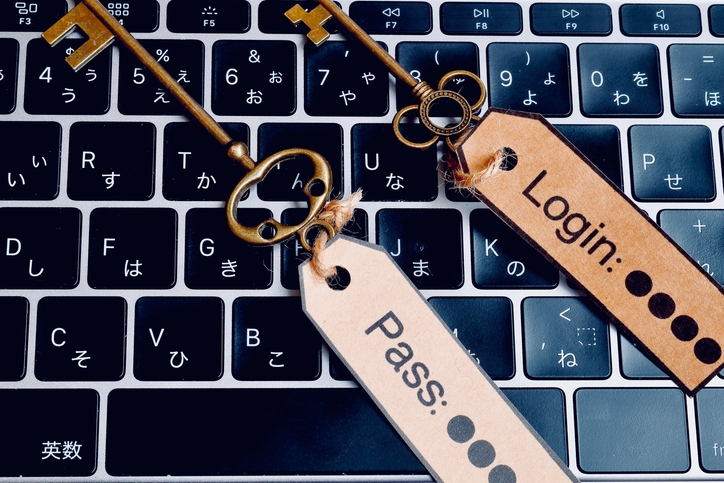
Passwords are words, phrases, or strings of characters used alongside a username to verify identity when accessing online resources. The first online password was used at MIT in 1960. Two years later in 1962, the first theft of an online password occurred and by 2009, password hacking was common.1
Today, even though over 90 percent of people are aware of the security risks of reusing passwords, 65 percent still do it. In fact, the average person uses the same password across fourteen different accounts.2 The reason many adults take the risk of getting hacked is password fatigue, the frustration of trying to remember and manage numerous different passwords.
In addition to reusing passwords, other issues include weak passwords, phishing, and data breaches. A password manager, software designed to generate, store, and autofill strong passwords, offers a partial fix but it has limitations.
Meet Passkeys
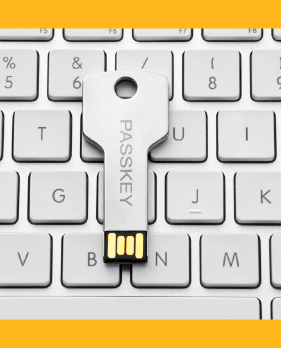
Passkeys are a password-less authentication method that uses cryptographic key pairs to securely log you into websites and apps. Instead of typing a password, you authenticate with a device such as your phone or computer. They’re easy to use without the need to memorize anything.
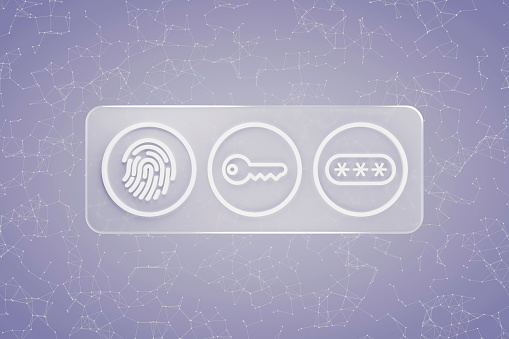
The authenticator still requires user verification, which can be a PIN, password or biometric. Biometrics, which are optional, include:
Passkeys can sync across devices when stored in a password manager or remain device-bound when stored in hardware.
Security Benefits of Passkeys
When you create a passkey, your device generates a pair of cryptographic keys:
Private information doesn’t need to be stored on the server, only the passkey is stored.
Passkeys Aren’t Perfect
Passkeys are highly resistant to hacking but no system is infallible. They depend on the security of your device. For example, if malware compromises your device, your passkey may be at risk.
Backup solutions and recovery steps are essential in case you lose, break or replace your device. Passkeys can be backed up in the cloud or stored in a password manager. Other drawbacks to consider include:
Jenna’s struggle isn’t unique. It’s the reality for millions of people juggling countless passwords every day. While password managers offer some relief, they’re not a perfect solution. Passkeys represent the next evolution in digital security: simpler, stronger, and far less vulnerable to the risks that plague traditional passwords.
Tech experts believe the mainstream transition to passkeys may be a long or gradual one like the shift from magnetic swipe cards to chip cards. As technology moves forward, embracing passkeys won’t be just about convenience. It will be about safeguarding our digital lives.
Sharon McDowell serves as the business liaison and technical trainer at MMBB. She joined MMBB’s staff in 1992 and served on MMBB’s Help Desk team as a network analyst for more than 15 years. She is currently responsible for coordinating MMBB’s ongoing cybersecurity training. Her education includes a BS in computer science from State University of New York, College at New Paltz.
Translations of any materials into languages other than English are intended solely as a convenience to the non-English-reading public. We have attempted to provide an accurate translation of the original material in English, but due to the nuances in translating to a foreign language, slight differences may exist.
Las traducciones de cualquier material a idiomas que no sean el inglés son para la conveniencia de aquellos que no leen inglés. Hemos intentado proporcionar una traducción precisa del material original en inglés, pero debido a las diferencias de la traducción a un idioma extranjero, pueden existir ligeras diferencias.
You will be linking to another website not owned or operated by MMBB. MMBB is not responsible for the availability or content of this website and does not represent either the linked website or you, should you enter into a transaction. The inclusion of any hyperlink does not imply any endorsement, investigation, verification or monitoring by MMBB of any information in any hyperlinked site. We encourage you to review their privacy and security policies which may differ from MMBB.
If you “Proceed”, the link will open in a new window.

 Back to Top



 Next
Next