
Most clergy pride themselves on being biblically literate. We realize that biblical literacy is not a one-shot affair; we continue to dedicate time and energy to scriptural study throughout our careers.




By Rev. Earl Thorpe, Ph.D., MMBB Financial Wellness Director
What’s in This Article
A clergy sabbatical is not simply extended time away from work. At its best, it is a sacred season of rest, renewal, and reflection that benefits both the pastor and the congregation. Rooted in the biblical rhythm of Sabbath, sabbaticals acknowledge a simple truth: ministry is demanding, and sustained faithfulness requires intentional periods of restoration. Preparing well for a sabbatical is essential to ensure that this time fulfills its purpose.¹
Providing Time to Plan
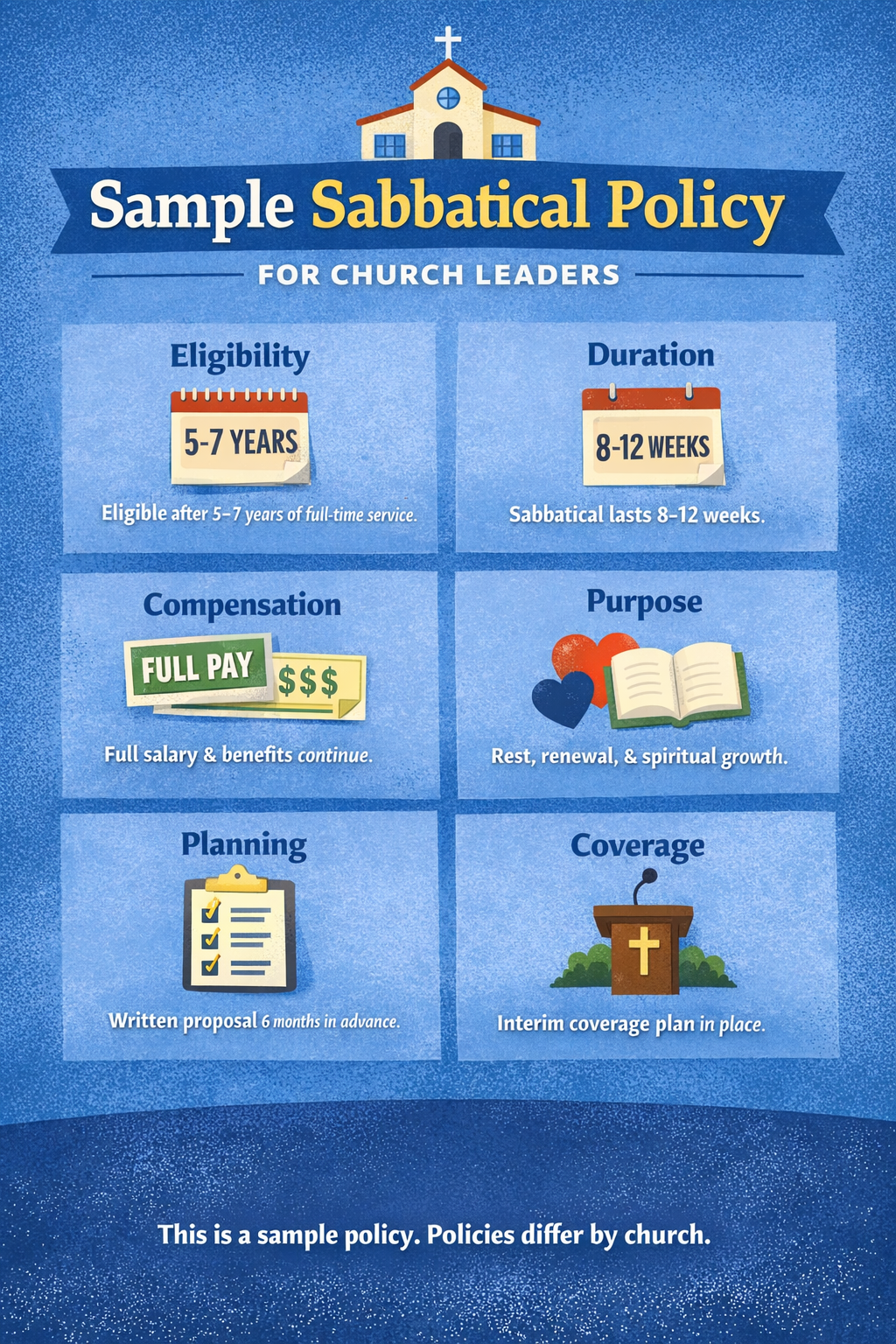
In the free church community, sabbatical policies and practices differ by church. Sabbaticals can range from four to 12 weeks, and in many medium-to-large churches they include paid time off with benefits. In most instances, the pastor will need to request a sabbatical at least six months in advance. This type of leave requires significant preparation time to address logistics, staffing coverage, communication, and budgeting responsibly.²
If the church or organization does not offer paid sabbaticals, the clergyperson will also need to ensure they have the funds to cover their living expenses during this time off without incurring debt. When churches offer paid sabbaticals, keep in mind that sabbatical pay is considered part of the clergyperson’s taxable income.
Clarifying the Purpose of a Sabbatical
Healthy sabbaticals begin with clarity. Church leaders and pastors benefit from a shared understanding of what a sabbatical is—and what it is not. A sabbatical is distinct from a vacation or academic study leave. It is a planned period during which clergy are released from their regular ministry responsibilities to rest, reflect, and renew spiritually, emotionally, and physically.³ When expectations are unclear, sabbaticals can create confusion or disappointment. When expectations are aligned, they foster trust and mutual support.
Many churches find it helpful to articulate goals for the sabbatical, such as spiritual renewal, personal restoration, or discernment for the next season of ministry. These goals are not performance benchmarks but guiding intentions that shape how the time is structured.⁴


Establishing Leadership Support and Policy
Effective preparation requires leadership buy in. Congregations that approach sabbaticals as a shared commitment—rather than a personal privilege—lay the foundation for success. Church governing bodies are encouraged to adopt a written sabbatical policy outlining eligibility, length, expectations, and financial provisions.² Clear policies provide fairness, reduce anxiety, and help normalize sabbaticals as part of healthy ministry life rather than as an exception.
Planning for Ministry Continuity
Another key step is ensuring continuity of ministry during the pastor’s absence. This includes identifying who will preach, lead pastoral care, and manage essential responsibilities. Delegating clearly—not informally—is critical. Well defined plans empower other leaders to step into meaningful roles and often foster leadership development within the congregation.⁵
Equally important is establishing communication boundaries. Many sabbatical guidelines stress that true rest requires clergy to disengage from routine ministry communication. Emergency protocols can be defined in advance, but ongoing involvement undermines the restorative purpose of the sabbatical.³
Preparing for Rest, Not Productivity
One of the most common pitfalls during sabbaticals is the temptation to remain productive. Clergy should be wary of filling their sabbaticals with work like projects, extensive travel, or ministry related output.⁵ Instead, sabbaticals invite clergy to practice stillness, prayer, reflection, and unhurried time with God and loved ones.
This is not inactivity for its own sake. Rather, it creates space for deeper spiritual grounding and restored perspective—gifts that equip pastors for long term ministry health.⁴
Planning for Re-Entry
Preparation does not end when the sabbatical begins. Thoughtful re-entry planning helps pastors return without immediately reverting to the pace and pressures that led to exhaustion. Gradual re-engagement, space for reflection, and shared conversations about insights gained can help integrate the sabbatical’s fruit into ongoing ministry.⁴
Churches that approach sabbaticals with care and intention often find that the benefits extend well beyond the pastor. Congregations experience strengthened leadership, renewed vision, and healthier ministry culture. When sabbaticals are prepared well, they do not interrupt ministry—they enrich it for years to come.
The Rev. Earl Thorpe, Ph.D., serves as the Financial Wellness Program Director at MMBB. Before joining MMBB, Earl spent nearly 20 years on Wall Street, where he provided equity sales, research coverage, market-making, and execution trading to top hedge, mutual, and pension funds. Earl is also the pastor of the Church-in-the-Garden, First Baptist, a multicultural American Baptist Church located in Garden City, NY.
Footnotes
1. Orthodox Presbyterian Church Committee on Ministerial Care. (2025). Guidelines for a ministerial sabbatical. https://opccmc.org/sabbatical-guidelines/ [opccmc.org]
2. Chemistry Staffing. (2024). Ministry sabbatical planning steps. https://blog.chemistrystaffing.com/ministry-sabbatical-planning-steps-305 [blog.chemi...affing.com]
3. Logos Bible Study Platform. (2025). Pastor sabbatical guide. https://www.logos.com/grow/min-pastor-sabbatical-guide/ [logos.com]
4. Lifeway Research. (2025). 5 steps to your first sabbatical. https://research.lifeway.com/2025/02/12/5-steps-to-your-first-sabbatical/ [research.lifeway.com]
5. Interest Time. (2025). 10 best practices for a successful sabbatical. https://interesttime.org/10-best-practices-for-a-successful-sabbatical/ [interesttime.org]
Translations of any materials into languages other than English are intended solely as a convenience to the non-English-reading public. We have attempted to provide an accurate translation of the original material in English, but due to the nuances in translating to a foreign language, slight differences may exist.
Las traducciones de cualquier material a idiomas que no sean el inglés son para la conveniencia de aquellos que no leen inglés. Hemos intentado proporcionar una traducción precisa del material original en inglés, pero debido a las diferencias de la traducción a un idioma extranjero, pueden existir ligeras diferencias.
You will be linking to another website not owned or operated by MMBB. MMBB is not responsible for the availability or content of this website and does not represent either the linked website or you, should you enter into a transaction. The inclusion of any hyperlink does not imply any endorsement, investigation, verification or monitoring by MMBB of any information in any hyperlinked site. We encourage you to review their privacy and security policies which may differ from MMBB.
If you “Proceed”, the link will open in a new window.

 Back to Top


 Next
Next