Understanding the Unique Financial Realities of Living Single
For men and women, the stigma associated with remaining single has significantly decreased, making it more desirable for some people to choose solo living. Whatever the reason, proactive planning is essential when managing life independently.
6 minute read
Now playingUnderstanding the Unique Financial Realities of Living Single
What Are the Biggest Financial Challenges Singles Face?
How Can Singles Plan for Long-Term Financial Stability?
Why Is Life Insurance Important If You're Single?
Do Singles Need Long-Term Care Insurance?
What Estate Planning Documents Should Every Single Adult Have?
How Can You Create a Financial Legacy Without a Spouse or Children?
Financial Planning Checklist for People Who Are Suddenly Single
The number of people choosing to remain single is on the rise. While there is no one reason behind this trend, one major factor is women’s increased access to employment, which has helped reduce financial dependence on men. Finances are among many reasons men may remain single. While women have made gains in the workforce, many men may still feel the expectation to carry the larger share of the financial responsibility for their families. With the rising cost of living, some men who view marriage as a financial burden may opt out.
For men and women, the stigma associated with remaining single has significantly decreased, making it more desirable for some people to choose solo living. Whatever the reason, proactive planning is essential when managing life independently.
Building a Strong Financial Foundation
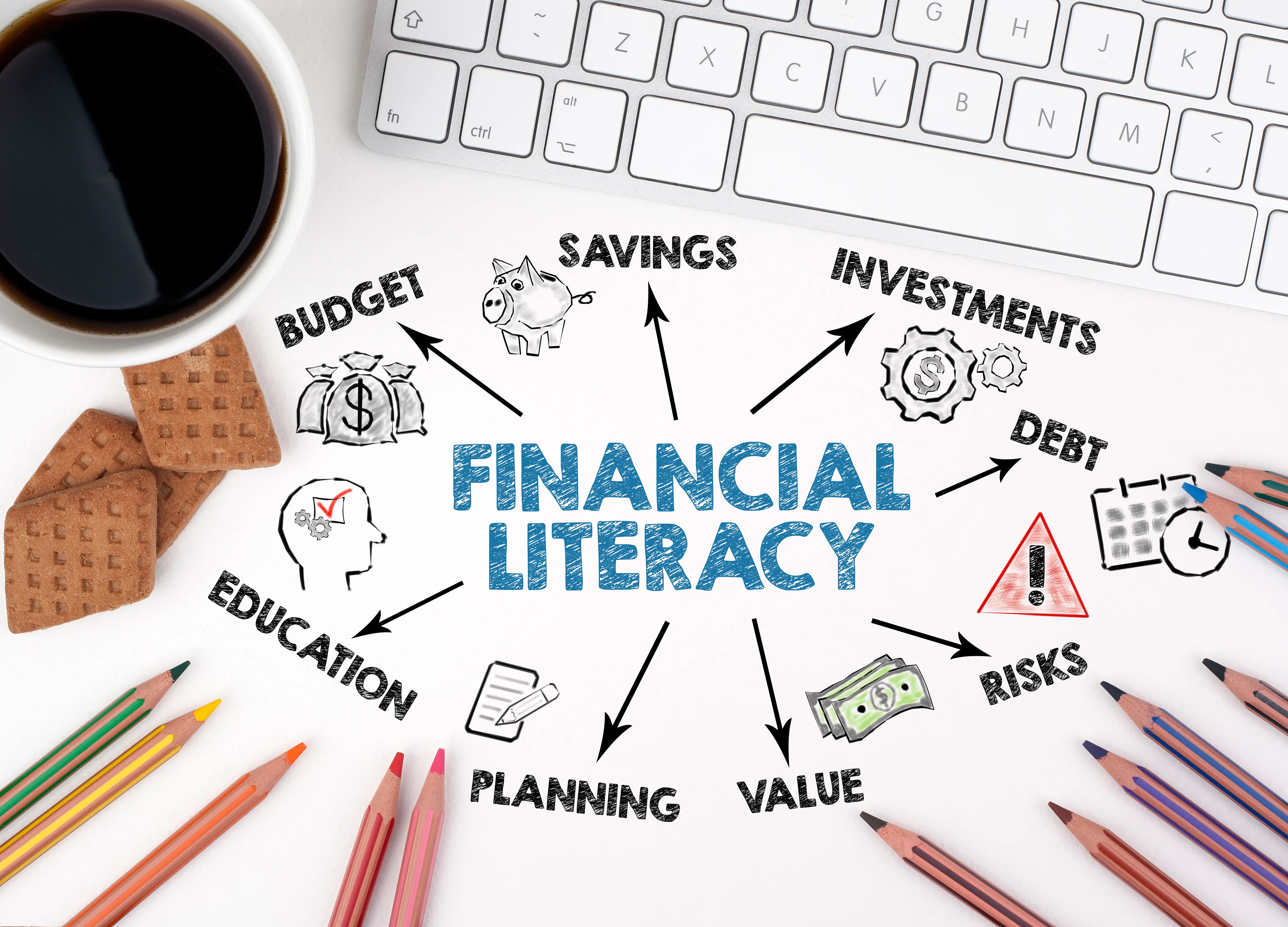
A budget is important for long-term stability when you’re single and dependent on one income. The budget should cover needs, wants and savings. See our article on budgeting for information on popular budgeting apps. To create a budget, it may be helpful to analyze your spending for a month, especially if you’re having trouble making ends meet or setting money aside. This will also help you understand where your money goes, how to spot patterns and track non-essential spending.
When creating a budget, it is helpful to:
Set goals
Create a list of priorities
Plan for irregular expenses as life happens
Build an emergency fund
This doesn’t have to be accomplished all at once. Start with small, manageable steps by identifying your priorities and setting short-term goals for the next month or year. For example, you might begin by building a $1,000 buffer, then work toward an emergency fund that covers three to six months of expenses. Over the next five years, focus on growing your savings for specific goals, such as buying a new car or taking a vacation, while continuing to strengthen your overall financial cushion. Long-term goals may include investing for retirement, saving for a child’s education, or preparing to buy a home.
"If available, a health savings account or flexible spending account can help create a cushion for routine care and unexpected health costs."
Costs Singles Face Alone
One of the biggest pain points for singles is the rising cost of housing and health care. When you are managing expenses on one income, there is no second paycheck to help absorb rent or mortgage increases, insurance premiums, medical bills, repairs or other unexpected costs. This reality can make daily financial choices more challenging, as one person is solely responsible for managing current expenses while planning for long-term financial stability. To avoid decision fatigue, it is helpful to build a support network that includes trusted family members, friends, and certified financial planners.
Housing is often the largest monthly expense. Singles may need to be intentional about how much of their income goes toward where they live. This may mean considering trade-offs such as location, space, transportation costs or whether it makes sense to rent or share housing expenses. For homeowners, it is also important to plan for costs that may rise over time, including property taxes, insurance, maintenance and repairs.
Healthcare planning is equally important. Even with employer-sponsored coverage, premiums, deductibles, prescriptions and out-of-pocket expenses can add up quickly. Singles should review their health insurance options carefully each year, understand what is covered and consider setting aside funds specifically for medical expenses. If available, a health savings account or flexible spending account can help create a cushion for routine care and unexpected health costs. The goal is to build flexibility, so job losses, medical issues or major repairs do not derail the broader financial plan.
Planning for Long-Term Financial Stability
Once the day-to-day foundation is in place, the next step is to look farther ahead. For singles, long-term financial stability means planning not only for retirement, but also for decisions about income, insurance, health care and legal matters that can help protect independence over time. Because there may not be a spouse or partner to share expenses, provide care or make financial decisions in an emergency, it is especially important to understand what resources are available and where additional planning may be needed.
As you plan, consider these strategies:
Take advantage of employer programs, especially if your company matches your retirement contributions.
Identify your guaranteed sources of income, such as an annuity or Social Security, and determine whether they cover your expenses.
The Benefits of Life Insurance
Life insurance is a way to provide financial protection for loved ones or beneficiaries after you die. Funerals cost thousands of dollars, and a policy can ensure your children, siblings or other family members aren't burdened with the bill.
Your family can also use the proceeds to pay off any debt you leave behind. This is especially important for co-signers of a mortgage or car loan. The policy payout may pay off the debt.
Lastly, a life insurance policy can help create generational wealth by providing a payout to beneficiaries.
Long-term Care Insurance
Navigating long-term care insurance (LTC) as a single person requires different strategies because singles often have a greater reliance on formal, paid care, which makes proper coverage important.
The most common types of long-term care insurance are:
Hybrid Life/LTC Policies. Also known as asset-based long-term care, this approach combines a life insurance policy with a long-term care (LTC) rider. If you need care, it pays out tax-free benefits. If you pass away without needing long-term care, your beneficiaries receive a tax-free death benefit.
Single-Premium (Single-Pay) LTC. This policy type is for people who have accumulated substantial assets or want to pay a single, lump sum.
Traditional LTC. Traditional policies are like auto or homeowners’ insurance. You pay an ongoing annual premium, but if you never need care, the premiums are lost. The premiums may increase, but these policies are usually the most affordable upfront.
To decide which is best for you, speak to a specialized insurance professional and your financial planner.
Leaving a Legacy
Consult an estate planning lawyer to create an estate plan, which should include a will, power of attorney and health care directives. Think about who you want to inherit your assets, how you want to support the people you love and whether charitable giving should be part of your estate plan. A good first step is to make sure beneficiaries are listed on all eligible accounts. From there, you may want to discuss whether a trust is right for you with your financial planner. A trust can help document your wishes, provide structure and make it easier for your assets to be managed according to your intentions. See our article on trusts. As life changes, such as children growing up, relationships shifting or financial priorities evolving, your estate plan should be reviewed and updated so it continues to reflect your goals.
In Conclusion
Single living brings independence, but it also requires intentional financial planning. By budgeting carefully, building savings, protecting yourself with insurance and keeping your estate plan up to date, you can create greater stability and confidence for the future.
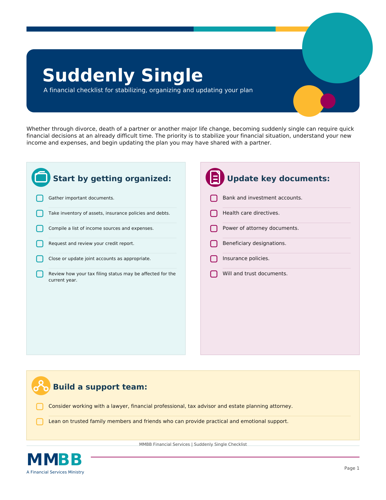
Check out our PDF “Suddenly Single,” a financial checklistfor people who are divorced, widows or widowers, or who become single because of other major life events.
The information contained herein is for informational purposes only. While MMBB made every attempt to ensure that the information is accurate, MMBB is not responsible for any errors or omissions or the results obtained from the use of this information. MMBB is not liable for any success or failure that is directly or indirectly related to the use of the information contained herein. The information contained herein does not constitute any financial, insurance, investment, legal, or tax advice. The inclusion of any third party links does not constitute an endorsement. In no event shall, MMBB and/or its fiduciaries, directors, officers, employees, or agents thereof be liable for any special, direct, indirect, consequential, or incidental damages or any damages whatsoever, whether in action of contract, negligence or tort, arising out of or in connection with the use of the information contained herein.
This article is available in audio format through our text-to-speech feature for accessibility and convenience. The text-to-speech feature is generated using artificial intelligence. While we strive for an accurate listening experience, this information may be incomplete or inaccurate. Please refer to the written version as the official source of content. This content should not be relied upon as a substitute for professional advice.
Images displayed in this material were created in whole or in part by generative artificial intelligence (AI) and are provided for illustrative purposes only. They may contain errors or inaccuracies and should not be relied upon as a substitute for professional advice. They are not intended to represent real individuals, organizations, or events.
What's the takeaway?
Resources for church finances and administration, clergy compensation & taxes, personal finance and financial wellness.
EXPLORE more articles in the current issue of TOMORROW…
Sign up to receive our TOMORROW newsletter packed with valuable insights every month.
TOMORROW
Translations of any materials into languages other than English are intended solely as a convenience to the non-English-reading public. We have attempted to provide an accurate translation of the original material in English, but due to the nuances in translating to a foreign language, slight differences may exist.
Las traducciones de cualquier material a idiomas que no sean el inglés son para la conveniencia de aquellos que no leen inglés. Hemos intentado proporcionar una traducción precisa del material original en inglés, pero debido a las diferencias de la traducción a un idioma extranjero, pueden existir ligeras diferencias.
You will be linking to another website not owned or operated by MMBB. MMBB is not responsible for the availability or content of this website and does not represent either the linked website or you, should you enter into a transaction. The inclusion of any hyperlink does not imply any endorsement, investigation, verification or monitoring by MMBB of any information in any hyperlinked site. We encourage you to review their privacy and security policies which may differ from MMBB.
If you “Proceed”, the link will open in a new window.